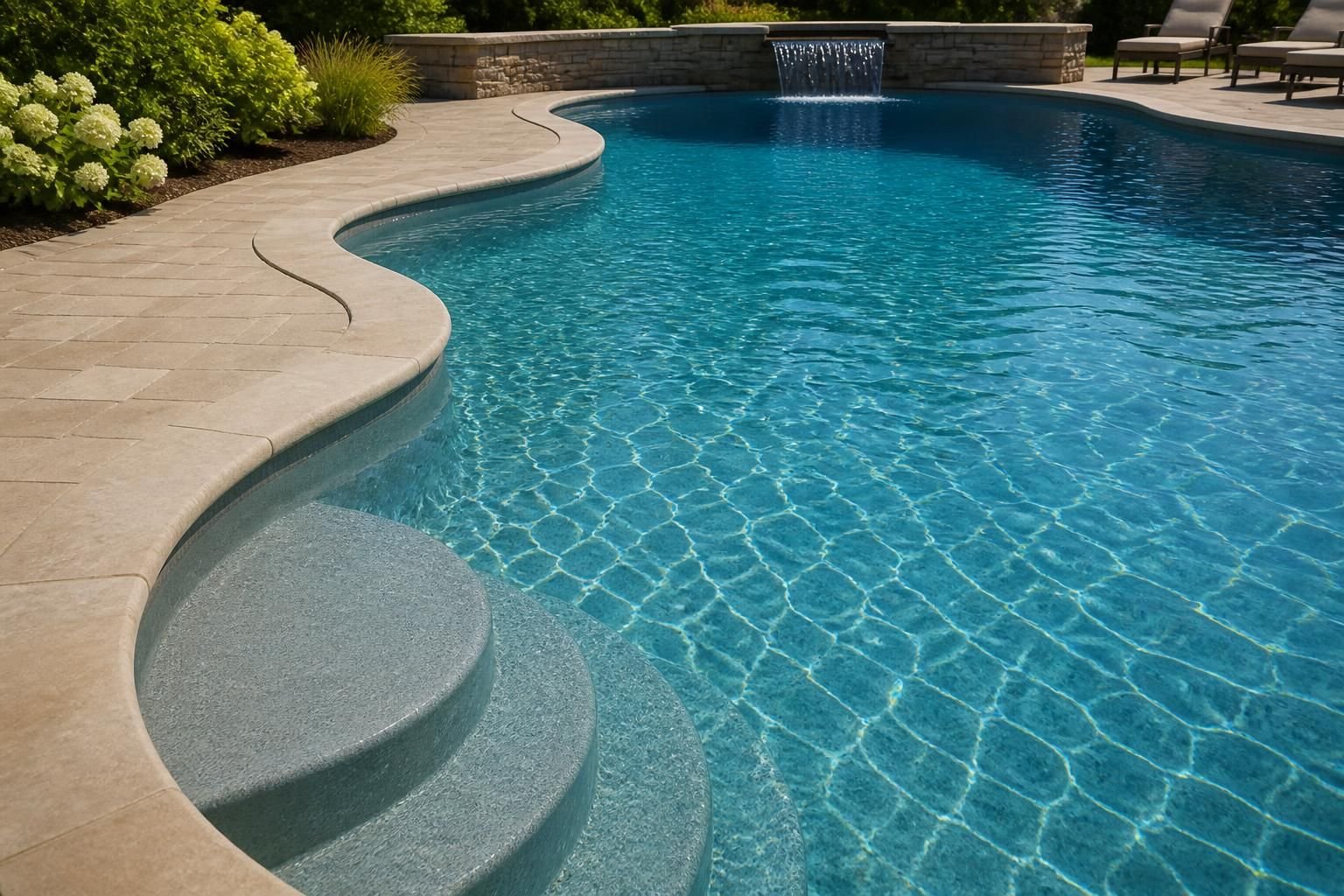
Gunite and fiberglass pools can both create an inviting backyard place to swim, relax, and gather. They are built differently, offer different levels of design flexibility, and work best for different priorities. Choosing between them is less about finding a universal winner and more about understanding how each option fits your property, preferred style, and intended use.
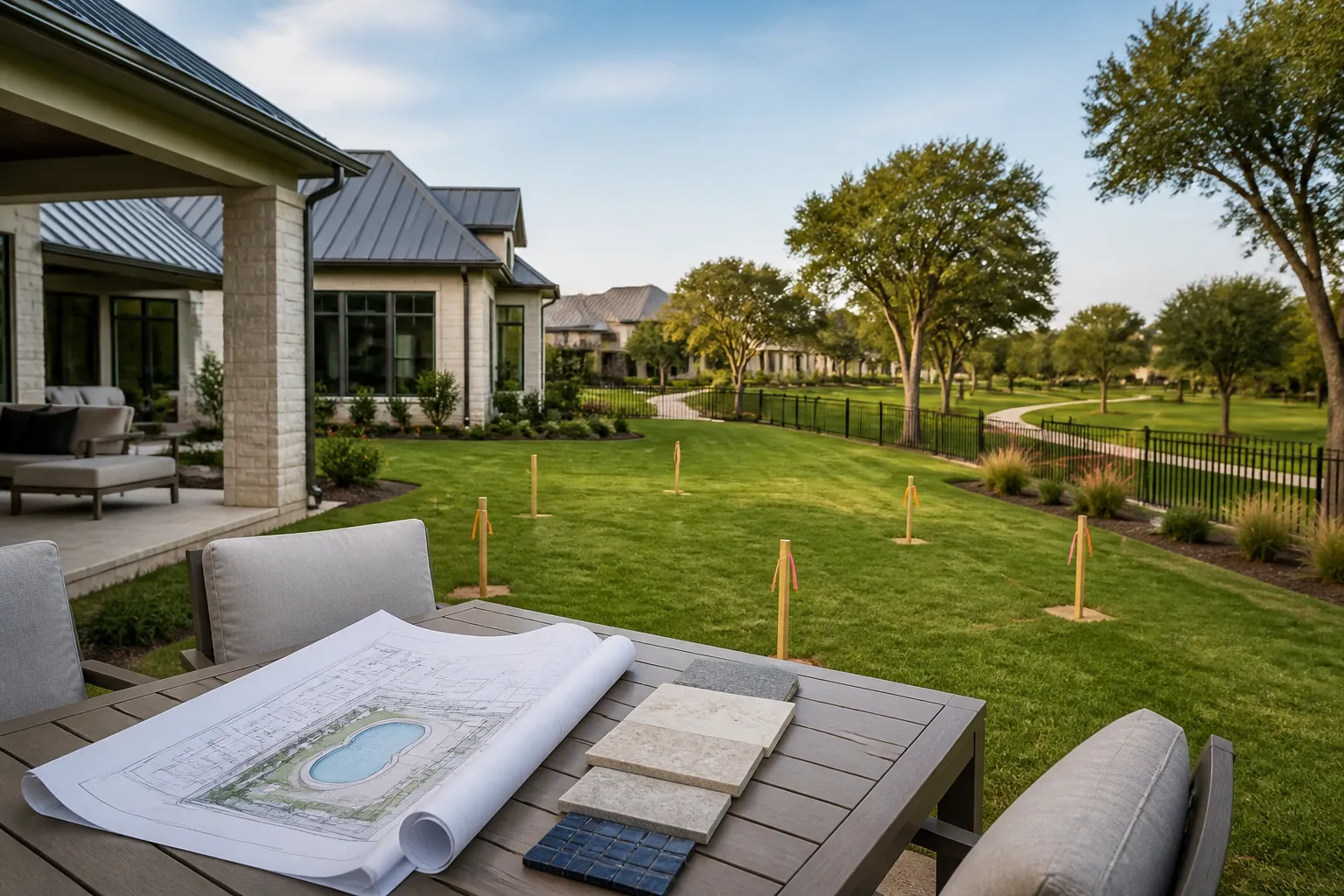
For homeowners in the Katy and Fulshear area, the right conversation starts with the yard. Access, available space, desired pool shape, patio plan, landscape style, and features such as a spa or tanning ledge all influence which path is more practical.
How Gunite Pools Are Built
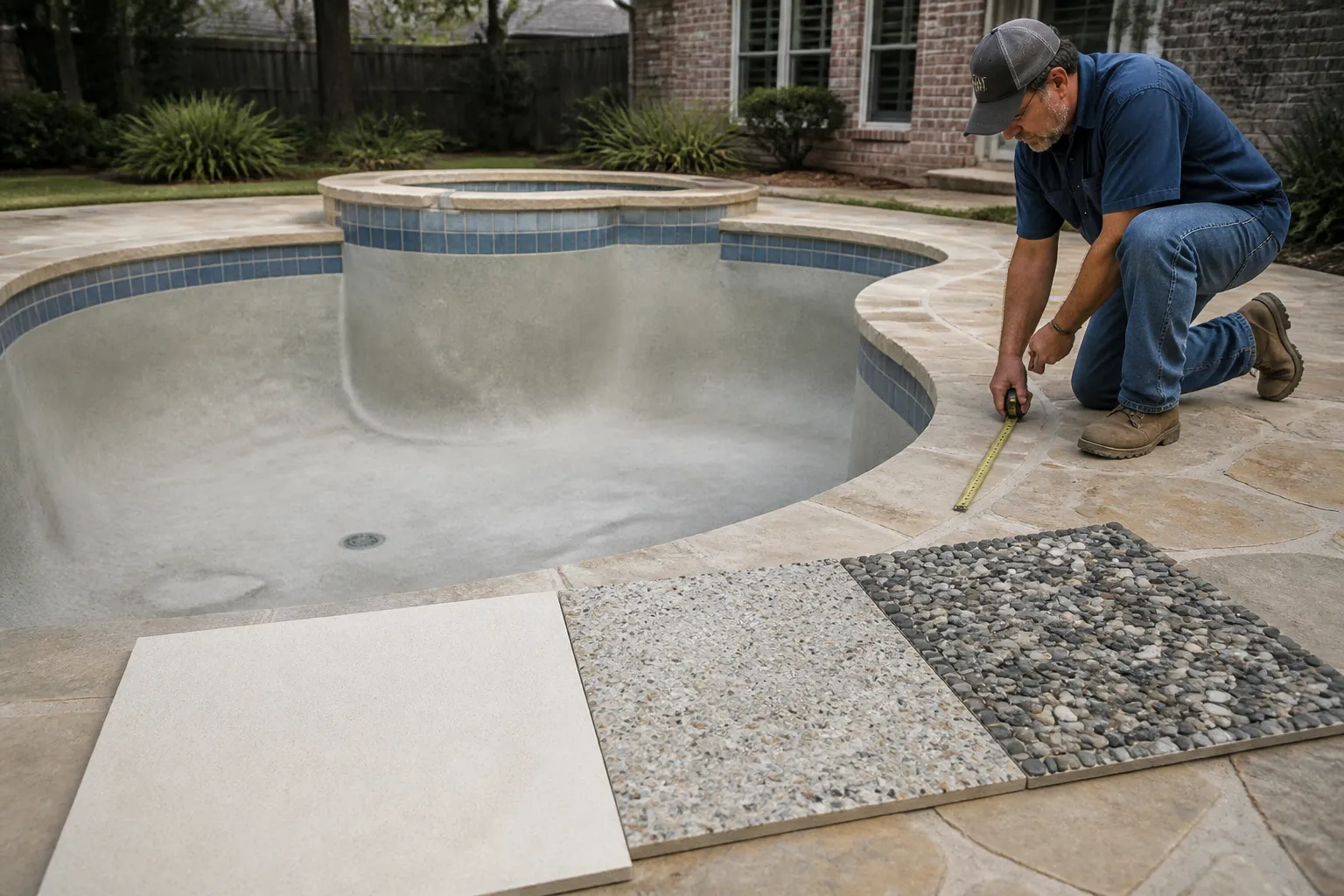
Gunite pools are constructed on site. The pool is excavated and shaped for the individual property, then the structure is formed before finishes and details are added. This process allows designers to tailor the pool’s dimensions and profile to the backyard rather than choosing from a set collection of shell sizes.
That flexibility is useful when a yard has an unusual shape, when a pool needs to connect to a custom patio, or when the design includes integrated features. A gunite pool can be geometric, freeform, compact, long and narrow, or built around a particular view or seating area.
How Fiberglass Pools Are Built
A fiberglass pool arrives as a manufactured shell in a defined range of sizes and shapes. The shell is set into a prepared excavation and then integrated with the surrounding deck, equipment, and landscape plan. Because the basic form is predetermined, the selected model must work with the property and the way you want to use the water.
This approach may appeal to homeowners who like a specific available shape and want to make selections within a more limited set of options. It is still important to plan the entire surrounding space, including access, drainage, coping, patios, and equipment.
Compare Shape and Feature Flexibility
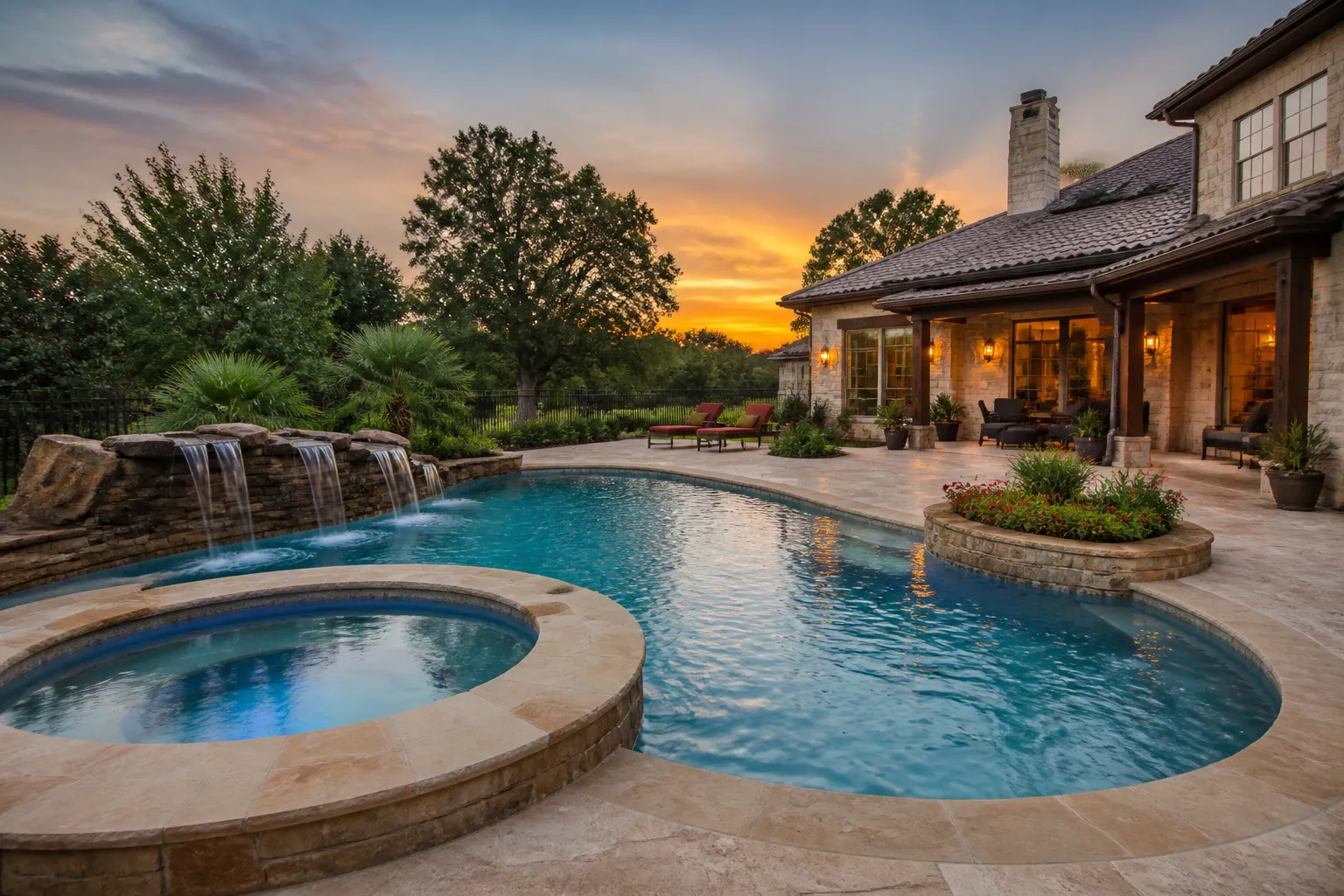
Gunite typically offers more freedom to customize length, depth, curves, steps, benches, tanning ledges, and spa placement. It can also make it easier to integrate a raised wall, scuppers, a spillway, or a feature designed around the pool’s exact dimensions.
Fiberglass options have improved in variety, and many shells include built-in steps, ledges, or seating. The distinction is that these features are part of the selected shell rather than designed independently for the backyard. If a catalog shape fits your goals, that can simplify the decision. If your vision depends on a highly specific layout, customization may matter more.
Think Beyond the Pool
The water is only one component of a finished backyard. Compare how each option will work with the deck, patio furniture, outdoor kitchen, landscaping, shade, and walking routes. A smaller pool with a generous, well-organized patio can be more useful than a larger pool with little space to gather.
Also discuss the view from the home. The pool’s edges, water color, tile, coping, and landscape can change the character of the backyard from the windows and primary seating areas.
Consider Everyday Use
- Do you want dedicated swim space or more lounging room?
- Will children use shallow areas, benches, or a tanning ledge?
- Would an attached spa be part of the design?
- Do you want water features, lighting, or app-based controls?
- How much space should remain for dining and entertaining?
Choose a Design That Fits Your Property
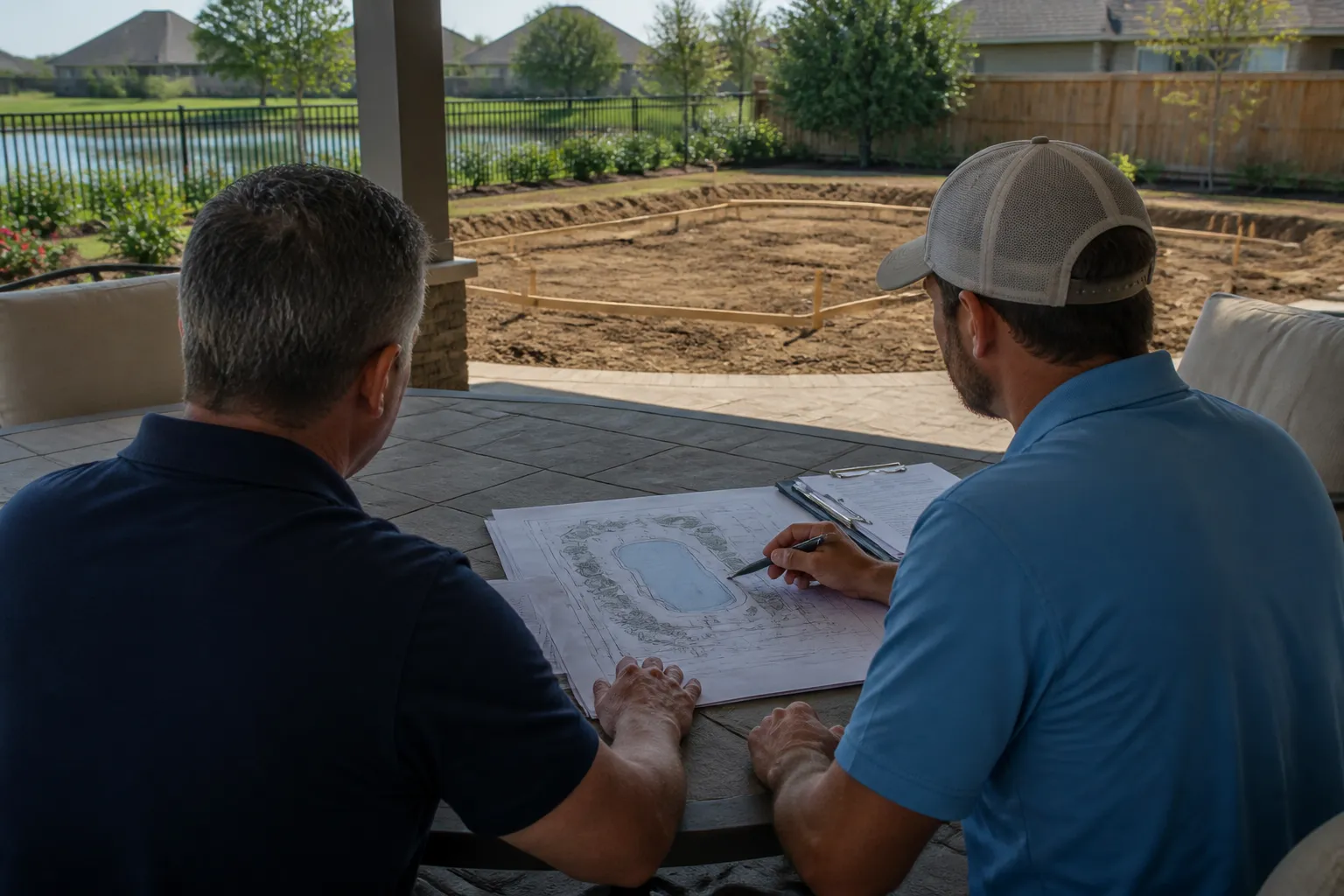
There is no substitute for looking at the actual backyard. A site-specific discussion helps identify where the pool can sit, how people will move around it, and which construction approach supports your priorities. Fulshear Custom Pools can help you compare gunite and fiberglass options as part of a complete outdoor-living plan.