When a pool surface becomes rough, stained, cracked, or worn, homeowners often begin with one practical question: what will resurfacing cost? There is no single price that applies to every pool in Katy or Fulshear because resurfacing is rarely just a matter of applying a new finish. The pool’s size, condition, chosen material, preparation needs, access, waterline tile, coping, and related repairs all affect the final scope.
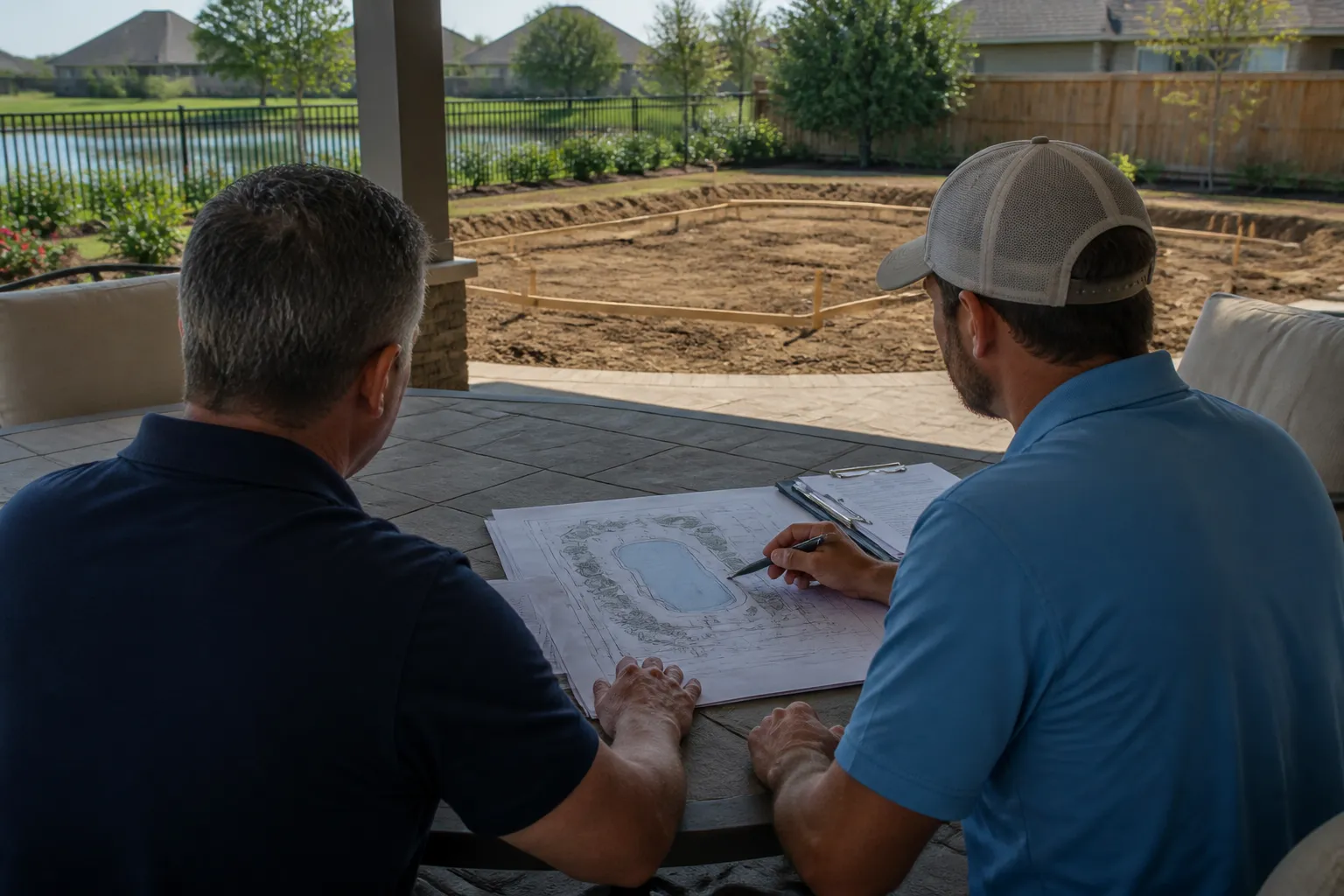
A useful estimate begins with an on-site evaluation and a clear definition of what is included. Instead of comparing two totals without context, compare the work behind each proposal. That makes it easier to understand the difference between a surface-only update and a more complete renovation of the pool and its visible details.
What Is Included in Pool Resurfacing?
Resurfacing typically involves removing or preparing the existing interior finish, addressing appropriate surface issues, and applying a new finish. The exact method depends on the existing condition and the finish being installed. Draining, preparation, cleanup, start-up procedures, and water balancing may also be part of the process.
Some projects remain focused on the interior surface. Others expand to include waterline tile, coping, steps, benches, lights, fittings, drains, or equipment upgrades. The more elements included, the more the project becomes a renovation plan rather than a straightforward resurfacing job.
Finish Selection Has a Major Effect on Cost
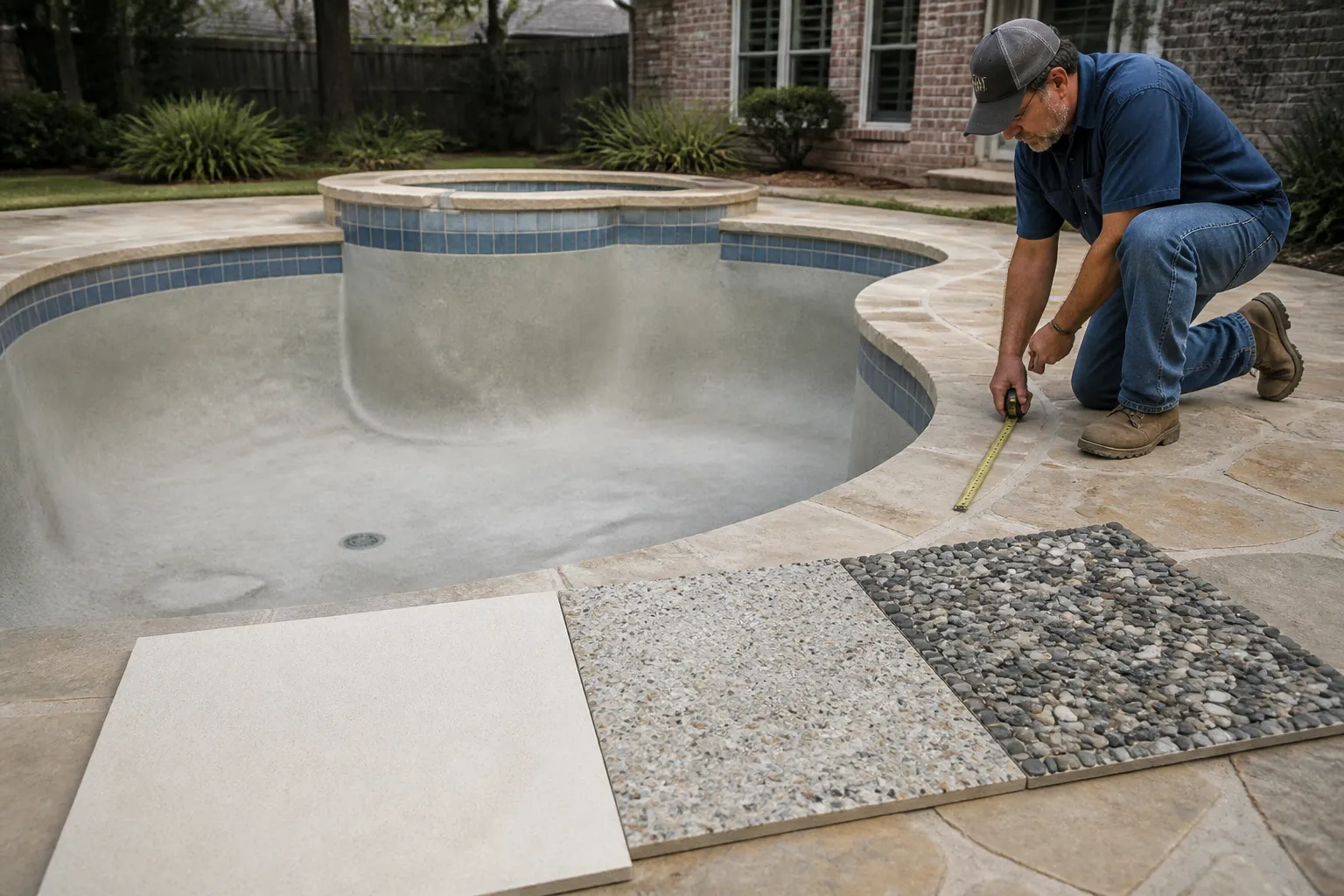
Homeowners often compare traditional plaster-style finishes with options that include quartz or pebble-like aggregates. These materials can create different colors, textures, and visual effects in the water. The selection should be based on the desired look, feel underfoot, maintenance expectations, and overall renovation budget.
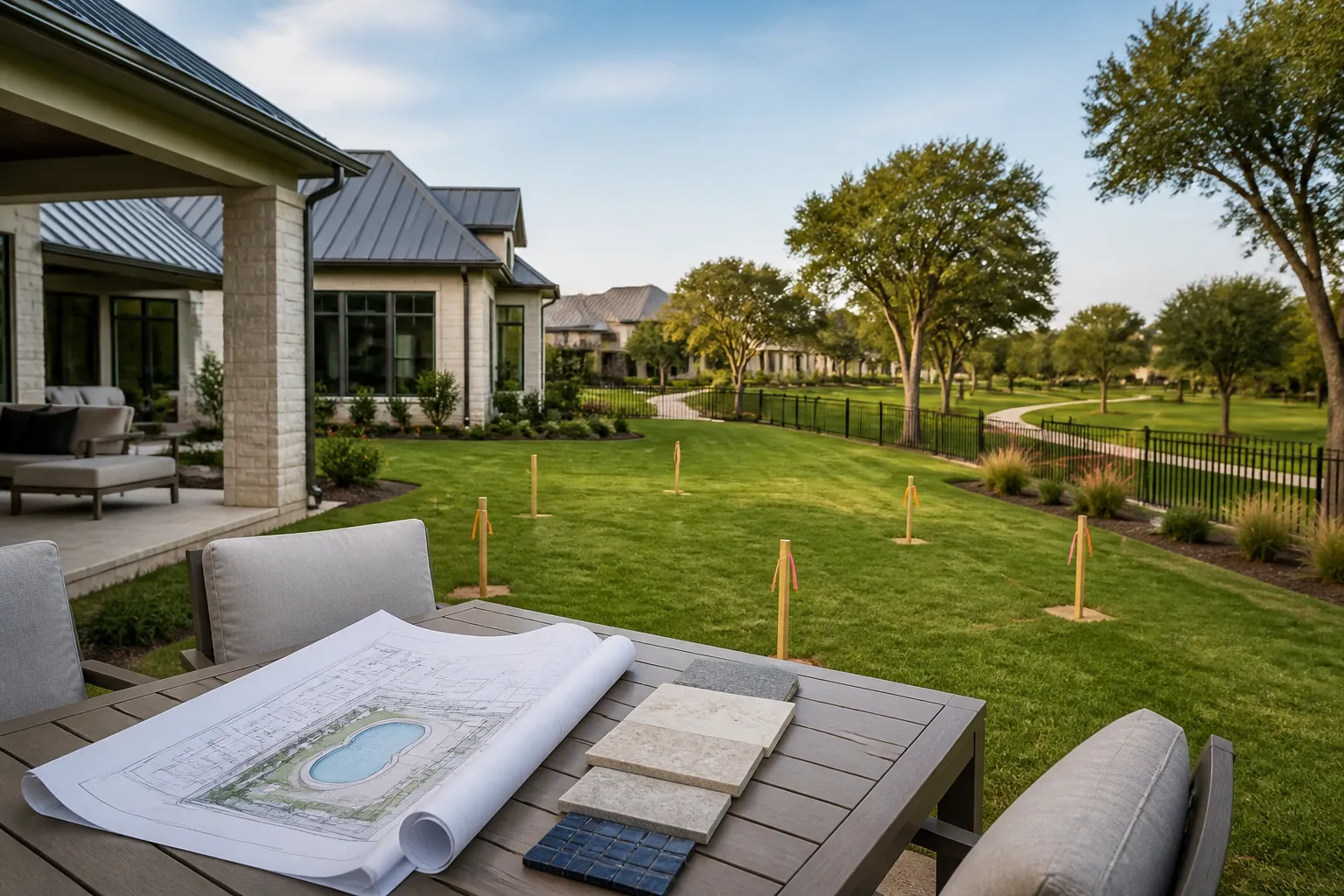
Samples are helpful, but view them outdoors if possible. Water depth, sunlight, shade, tile, coping, and surrounding landscape all influence how the finished color appears. A finish that looks ideal in a small sample can read differently across an entire pool.
Underlying Condition Can Change the Scope
Surface roughness and discoloration do not always tell the whole story. During evaluation, a pool professional looks for areas that may need attention before a new finish is applied. Cracks, delamination, hollow areas, failing tile, damaged coping, or related plumbing concerns can add work to the project.
This is why an estimate should distinguish between planned work and any conditions that may require further evaluation once the pool is prepared. Clear communication helps homeowners avoid mistaking a lower initial number for a complete scope.
Tile, Coping, and Deck Transitions Matter
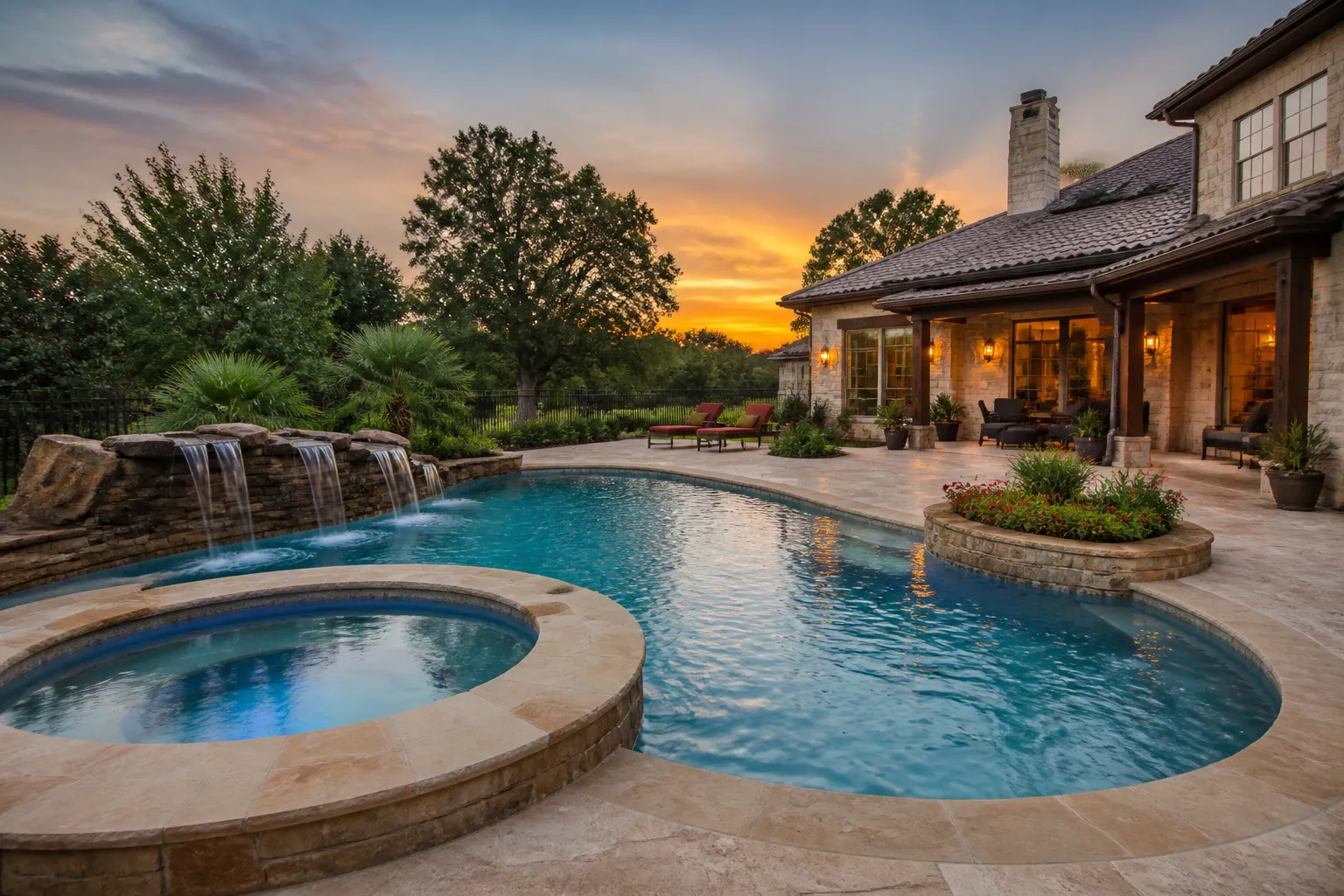
Waterline tile and coping frame the pool and can make an older interior finish stand out. Replacing them during resurfacing can create a more cohesive result, but it also adds material and labor. Tile patterns, specialty shapes, stone selections, and access to the pool edge can all affect the budget.
Consider how the pool meets the patio. If decking has settled, cracked, or no longer matches the updated pool, discuss it during the planning stage. It may make sense to sequence related improvements together, even if not every item needs to be completed at once.
Access, Pool Size, and Site Conditions Affect Labor
A compact backyard with limited equipment access may require different logistics than an open property. Pool size, depth, shape, attached spas, raised walls, and water features can also change preparation and installation requirements. These factors are not always visible in an online cost range, which is why a site-specific review is more useful than a generic number.
For homeowners comparing proposals, ask whether drainage, debris removal, start-up, material samples, site protection, and restoration are included. The goal is not to find the shortest list of line items. It is to understand what work will be completed and what the finished pool should look like.
Plan a Realistic Resurfacing Budget
Start by identifying priorities. Is the interior finish the only concern, or do the tile, coping, lighting, equipment, and patio also need attention? Separate must-have repairs from optional design updates, then ask for a clear explanation of each. This lets you make informed choices without treating necessary repairs and aesthetic upgrades as the same category.
Fulshear Custom Pools can help homeowners in Katy, Fulshear, and surrounding communities evaluate an aging pool surface and discuss a renovation plan that fits the condition of the pool and the goals for the backyard. A detailed inspection and written scope are the best starting point for understanding your resurfacing cost.