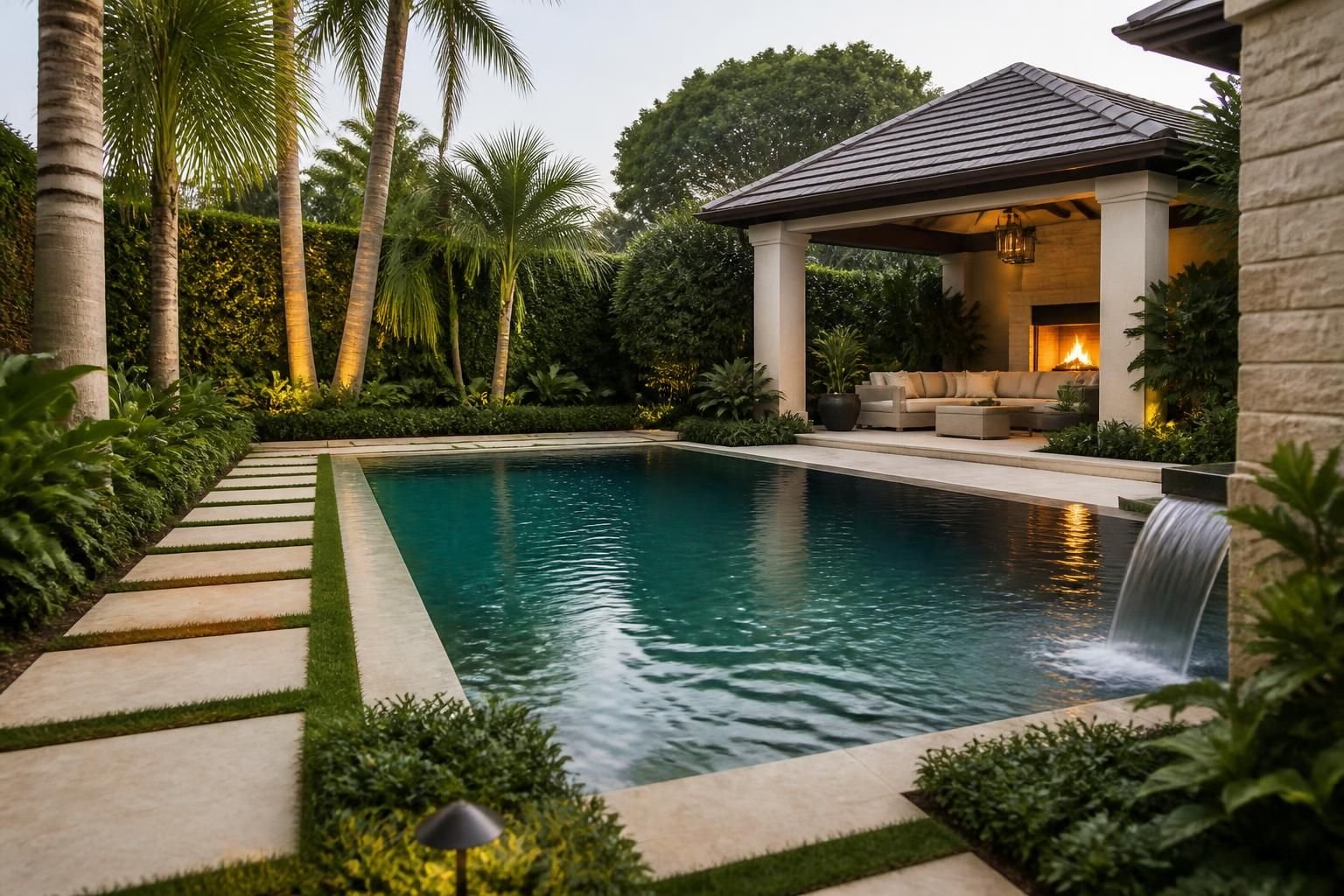
Pool decking does much more than frame the water. It creates the walking surface around the pool, connects the house to the backyard, and provides the room needed for chairs, dining, grilling, and conversation. Because it is such a visible and heavily used part of the project, the best decking choice starts with a layout plan instead of a color sample alone.
Concrete, pavers, and travertine-style surfaces can all work in a custom pool setting. Each has a different appearance, installation approach, and relationship to the home and landscape. For Katy and Fulshear homeowners, sun exposure, drainage, furniture zones, and the overall backyard style should guide the comparison.
Plan the Patio Before Choosing a Material
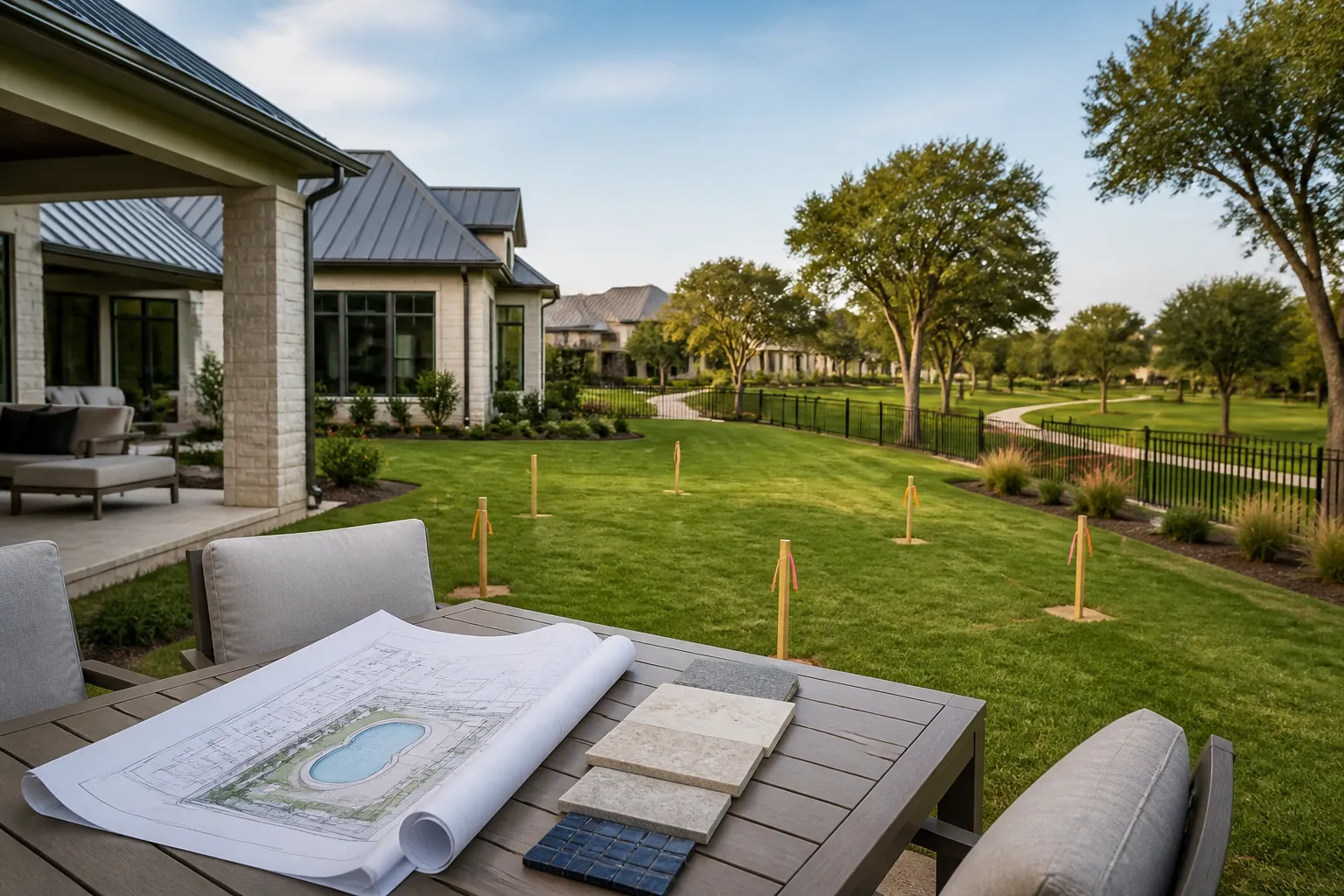
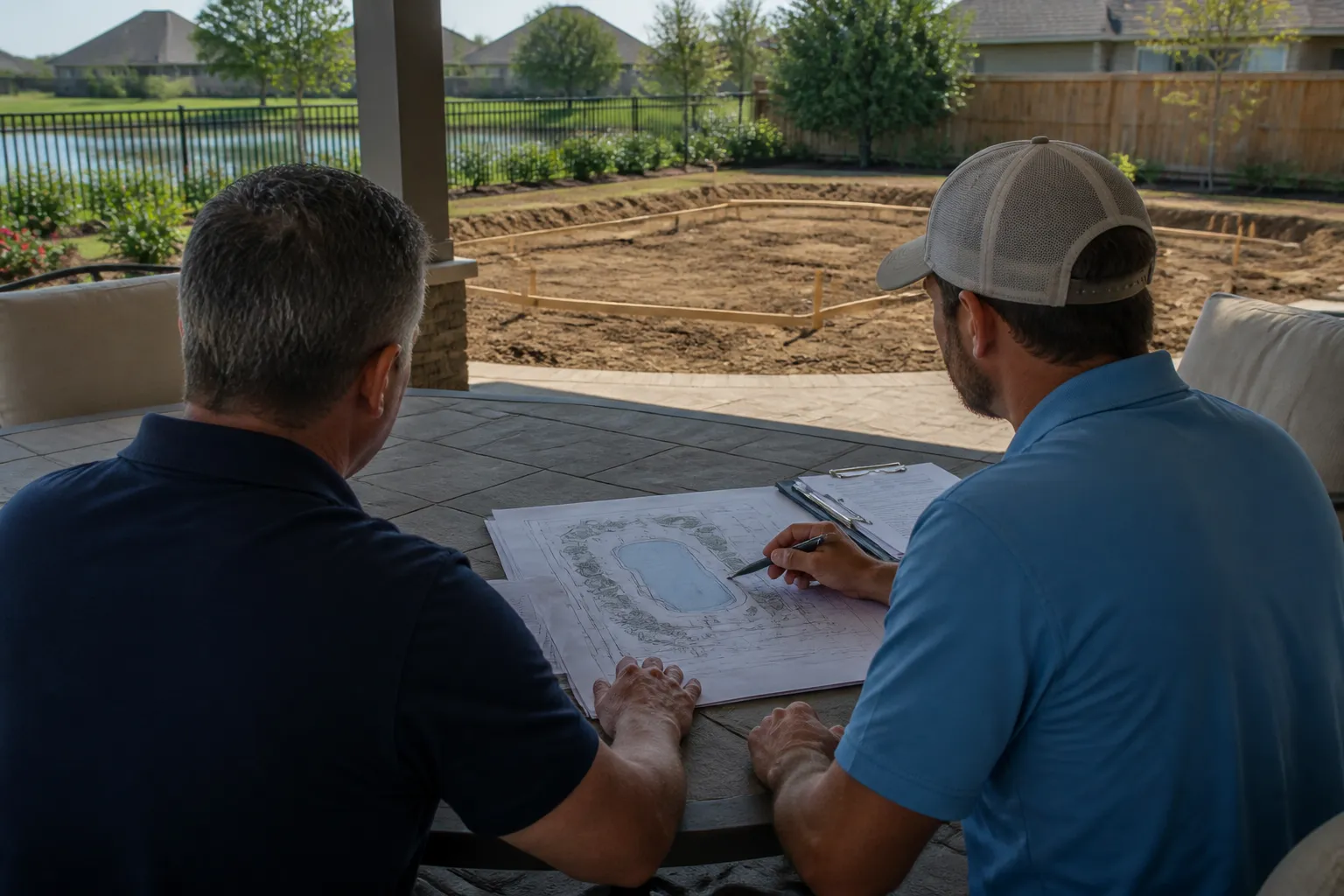
First, identify how the area needs to function. Leave clear paths from doors and gates to the pool, and allow space for people to move around lounge chairs without stepping into a traffic lane. If you want an outdoor table, grill, shade structure, or fire feature, include those elements early so the deck does not feel undersized after the pool is complete.
Drainage should also be part of the layout discussion. New hardscape needs intentional transitions where it meets the home, pool coping, and existing landscape. A site-specific plan considers grade and directs water appropriately rather than leaving drainage as a final detail.
Concrete Decking
Concrete offers broad flexibility because it can be shaped around curves, steps, planting areas, and patio zones. It can suit a simple, continuous deck or a more detailed layout with separate seating and walkway areas. Texture and color options allow concrete to coordinate with a wide range of pool styles and home exteriors.
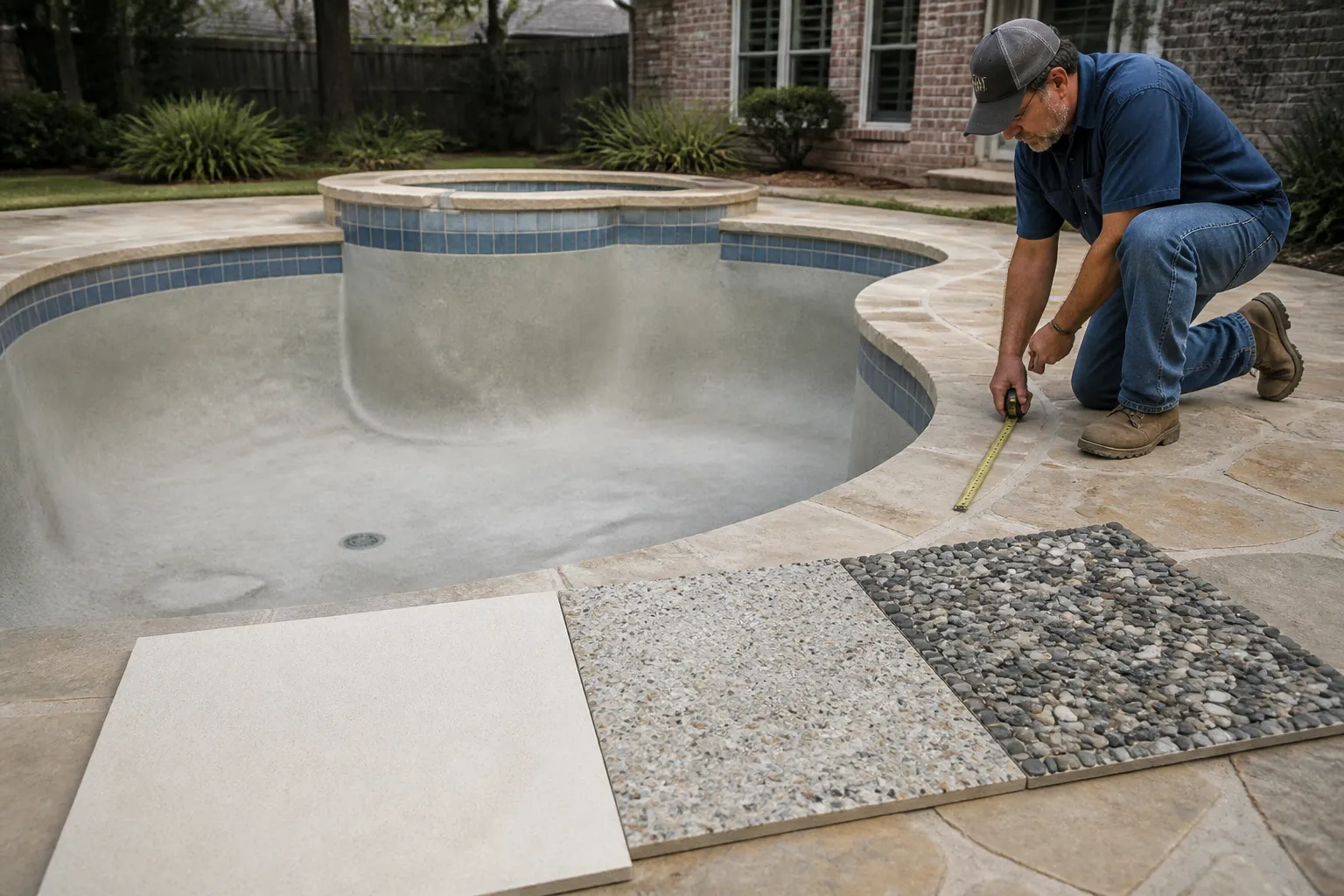
When comparing finishes, consider the feel underfoot, the amount of direct sun, and how the surface will look next to coping and waterline tile. A sample that looks right indoors or in a showroom may appear different in the bright light and reflected water around a pool.
Pavers
Pavers create a modular surface made from individual units. Their pattern, joint lines, colors, and shapes can add visual structure to the patio. They can work especially well when the design calls for defined walkways, geometric forms, or a material that creates contrast with a smooth pool finish.
The paver selection should support the scale of the backyard. Very busy patterns can compete with tile, stone, or water features, while a quieter pattern can help a pool remain the focal point. Review the edge details, coping transition, and landscape borders as part of the full plan.
Travertine and Stone-Inspired Surfaces
Travertine and other stone-inspired surfaces can bring a refined, textured character to a pool patio. Natural variations in tone can complement both traditional and contemporary homes. The key is selecting a color range that works with the pool’s interior finish, coping, landscaping, and exterior walls.
Not every stone or stone-look product performs the same way, so it is useful to discuss the intended use, maintenance expectations, sun exposure, and installation details with your pool professional. Material samples should be viewed outdoors and beside the proposed water color whenever possible.
Coordinate the Deck With the Pool Design
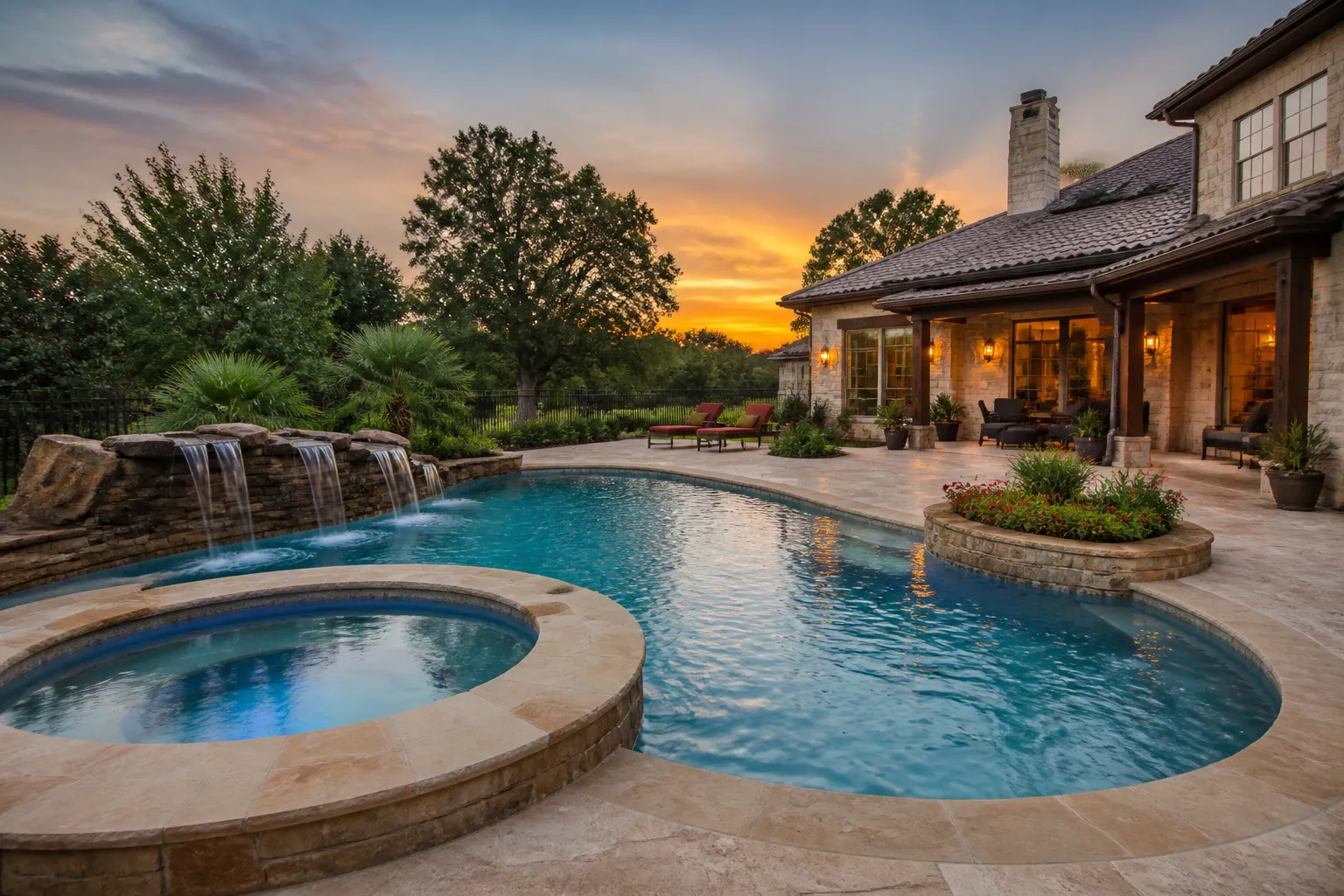
Decking should not be selected in isolation. The interior finish influences water color, tile provides detail at the waterline, coping defines the edge, and the deck establishes the larger visual field. Choosing these materials together helps create a backyard that feels intentional instead of assembled from unrelated choices.
Also think about the view from inside the home. A patio surface can be seen every day from windows and doors, even when the pool is not in use. Its tone and pattern should relate naturally to the architecture and the outdoor furniture you expect to add.
Match the Deck to Daily Use
A smaller deck may be sufficient for a swim-focused pool, while an entertaining-focused backyard needs more room for tables, lounge seating, and open circulation. Families may prefer an easy route between the house and shallow end. Homeowners who want a quieter retreat may prioritize a private seating nook or landscape buffer.
Fulshear Custom Pools can help you compare concrete, pavers, and travertine-style materials in the context of a complete pool and patio plan, so the finished deck supports both the look of the backyard and the way you live in it.