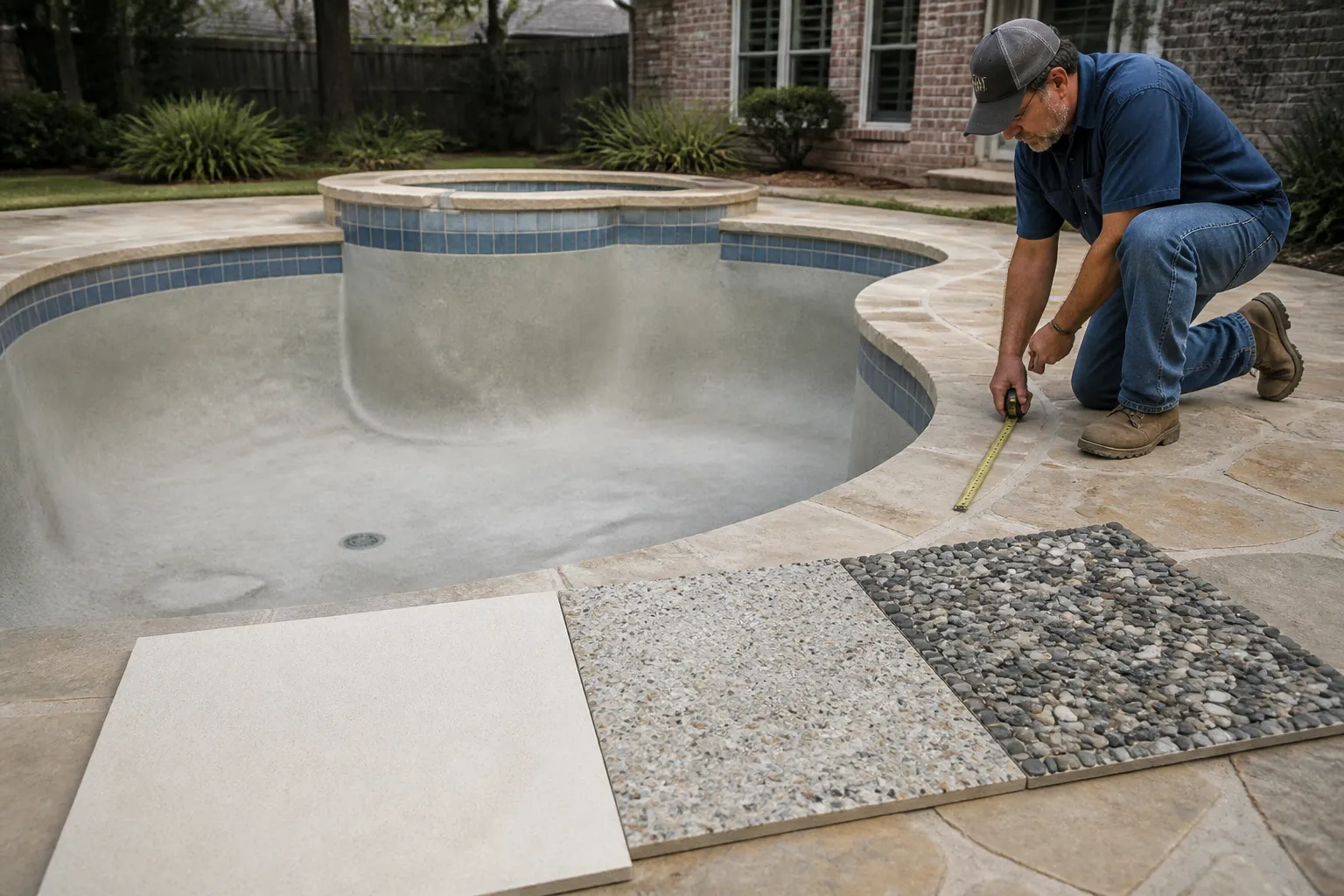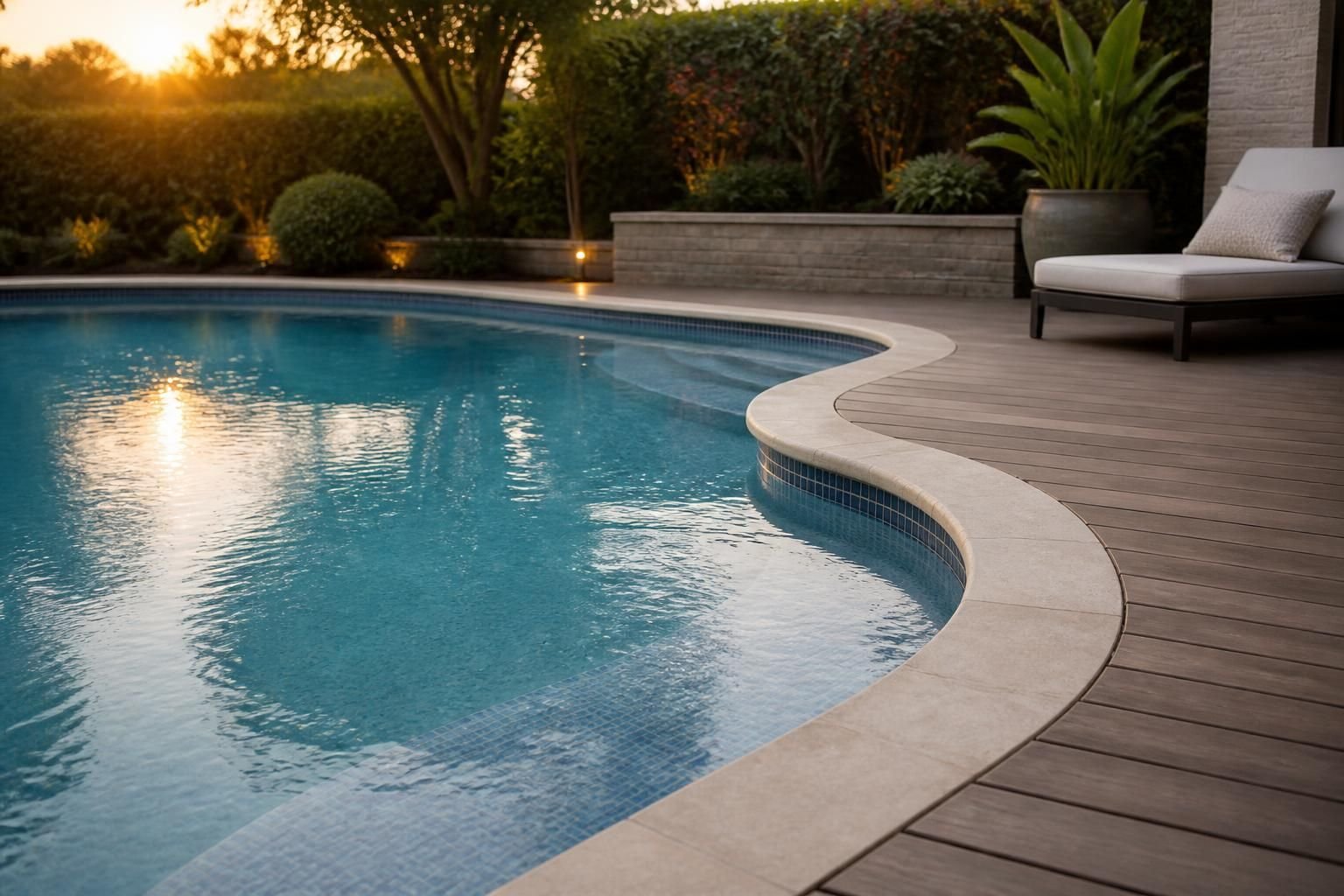
The interior finish of a pool affects far more than appearance. It protects the structure, influences water color, and creates the surface swimmers feel underfoot. Like other outdoor materials, it changes over time. A few marks may be normal, but persistent roughness, staining, cracking, or flaking can signal that it is time to discuss resurfacing.
Resurfacing is also a chance to update the pool as part of the larger backyard. A new plaster, quartz, or pebble-style finish can coordinate with tile, coping, decking, and landscape improvements. The right time to act depends on the pool’s condition, maintenance history, and the goals you have for the space.
1. Rough Areas Underfoot
A finish should feel generally comfortable when people walk, sit, or use the entry steps. If areas feel consistently rougher than the rest of the pool, the surface may be wearing. Do not assume every rough spot requires the same repair. A pool professional can help distinguish between an isolated concern and a finish that is nearing the end of its useful appearance.
2. Persistent Stains or Discoloration
Some surface marks respond to appropriate cleaning and water care. Others remain even after normal maintenance. Stains, mottling, or broad discoloration can make the water look less inviting and may be a reason to evaluate the finish. Document where the changes appear and whether they are getting larger or more noticeable over time.
3. Cracks, Flaking, or Peeling
Visible cracking, chipping, flaking, or peeling should be reviewed instead of ignored. The location and pattern matter, as do any related changes around tile, coping, or the waterline. A site evaluation helps identify whether resurfacing is the appropriate next step and whether other areas should be addressed at the same time.
4. Repeated Spot Repairs
One repair does not automatically mean the entire pool needs to be resurfaced. However, recurring patches can be a sign that a wider update would create a more consistent result. Consider how often the same areas need attention and whether the finished surface still looks uniform from the patio and home.
5. A Dull or Uneven Appearance
Even when a pool remains usable, its finish may no longer have the color or visual consistency you want. Sunlight, water chemistry, normal use, and age can change how the surface reflects light. If the pool has begun to look tired compared with an updated patio or landscape, resurfacing may be a practical design decision as well as a maintenance conversation.
6. Tile and Coping Are Being Updated
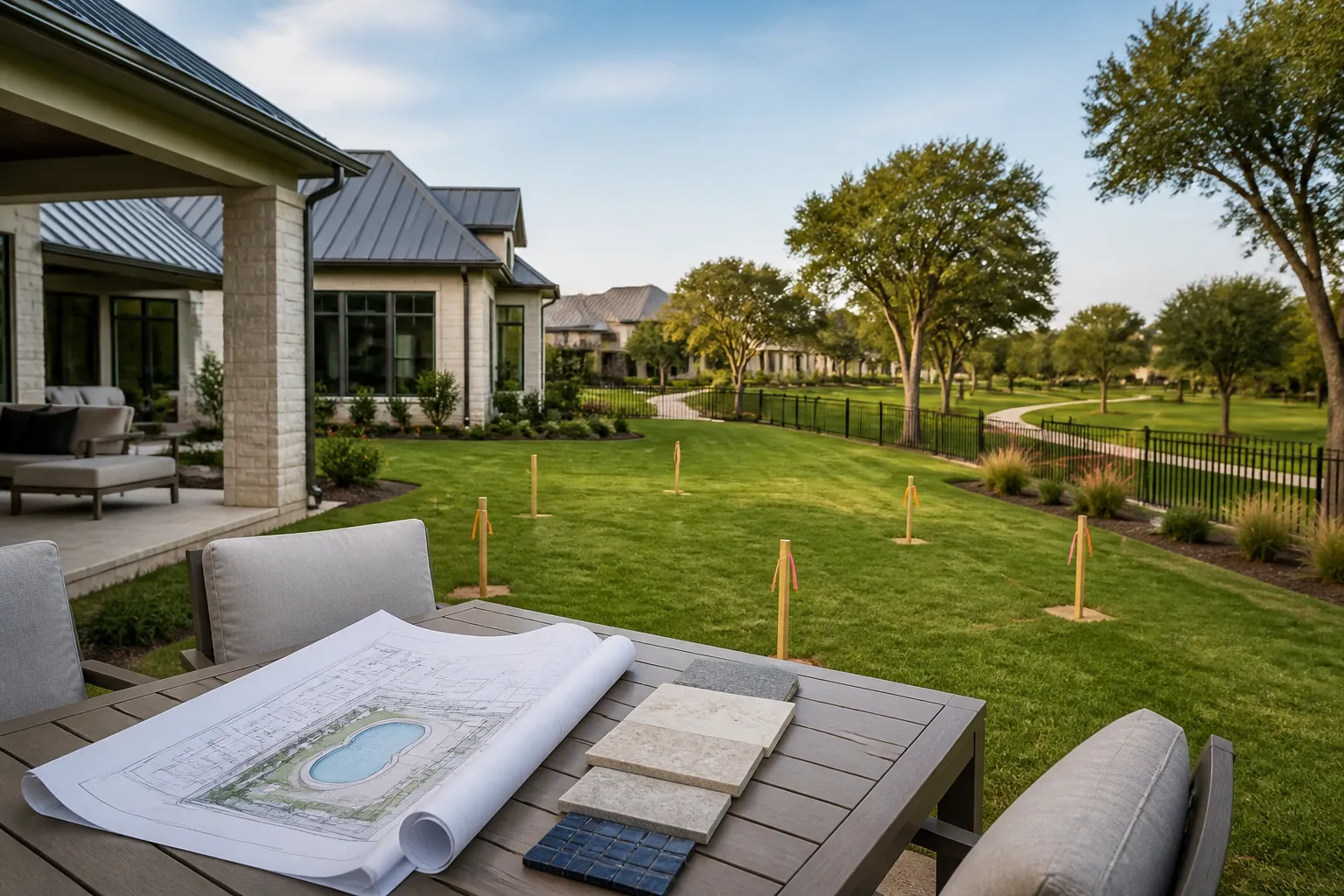
Replacing waterline tile or coping can make an older interior finish stand out more sharply. Planning these materials together helps create a cohesive palette. Water color is influenced by the finish, tile, depth, sky, and reflected surroundings, so review samples outdoors near the proposed pool area when possible.
7. Your Backyard Style Has Changed
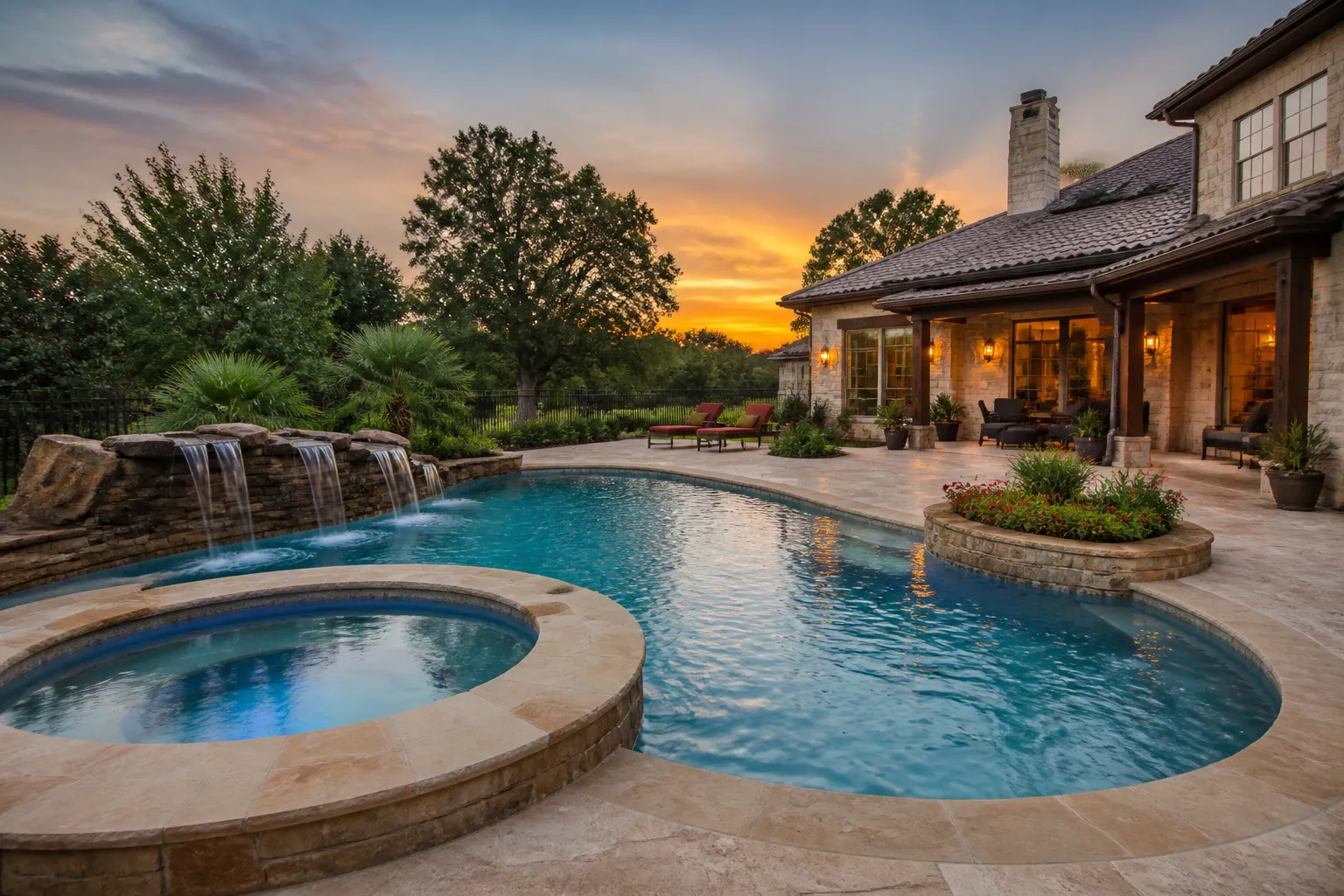
A pool that suited a previous patio or landscape plan may not match your current style. A new finish can support a brighter, darker, softer, or more textured look. It can also complement a remodel that includes new decking, lighting, a water feature, or an updated seating area.
8. A Larger Remodel Is Underway
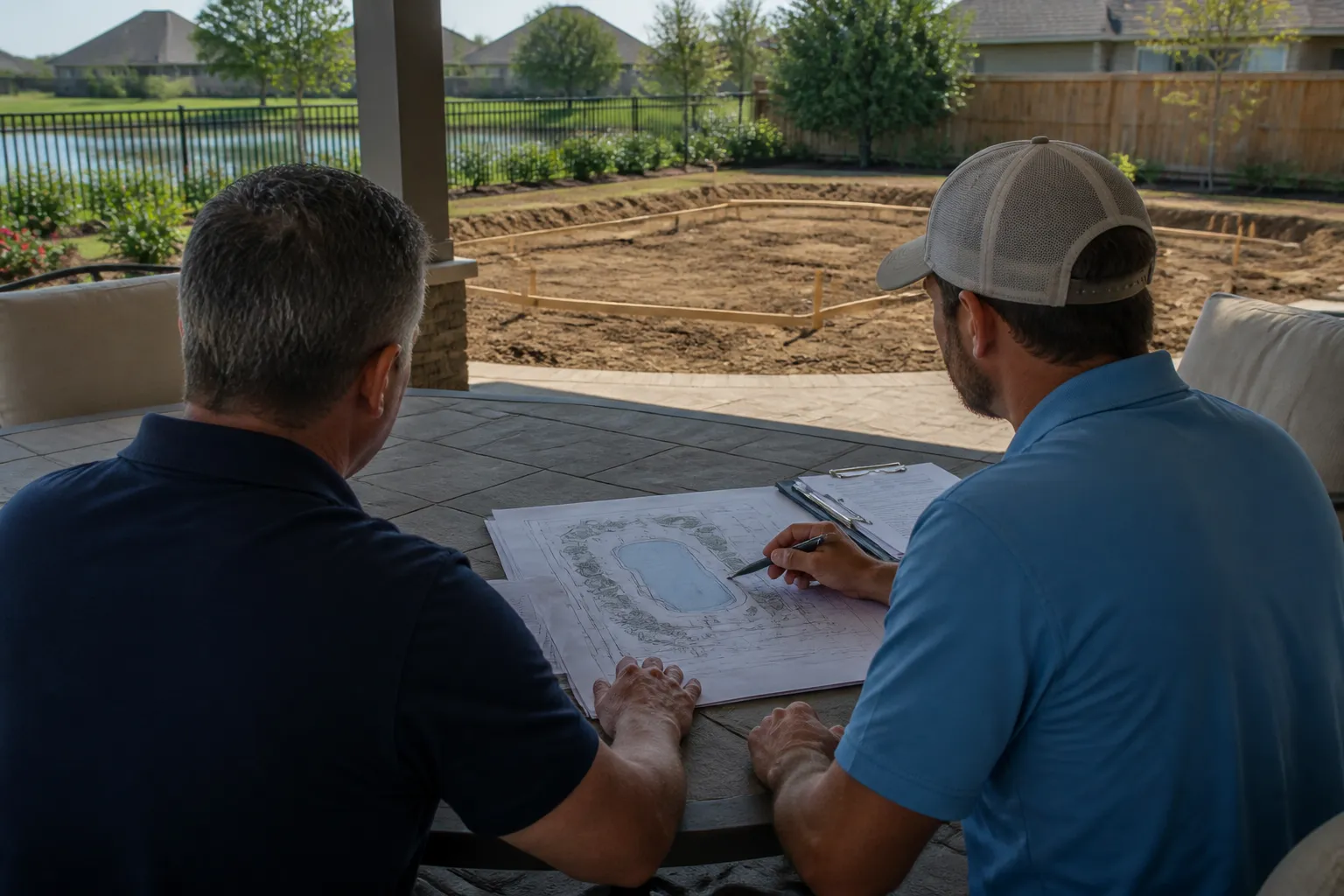
Resurfacing is often easier to coordinate with related improvements than to treat as an isolated project later. If you are changing steps, adding a tanning ledge, refreshing the deck, or evaluating equipment, discuss the finish at the same time. This allows the pool, patio, and visible details to be considered as one plan.
Plan the Update Around the Whole Pool
Before selecting a finish, consider how the pool is used, the condition of surrounding materials, and the desired view from the home. Fulshear Custom Pools can help homeowners in the Katy and Fulshear area review resurfacing options and build a plan that suits the existing pool and the backyard as a whole.