Texas summers place unique demands on a swimming pool. Long stretches of high heat and intense sun can raise water temperature, increase evaporation, accelerate sanitizer use, and make equipment work harder. Pool surfaces, decking, and surrounding materials also experience daily expansion, heat, and ultraviolet exposure. Understanding these effects helps homeowners respond early instead of waiting for a small issue to become a disruption.
Warm water changes the maintenance rhythm
Higher water temperatures can make it more difficult to hold a steady sanitizer level. Sunlight and frequent swimming add to the demand, which is why consistent testing matters during the hottest months. Rather than guessing, test according to your normal care plan and adjust based on actual readings and product guidance.
Warm water can also encourage algae growth when circulation or sanitation falls behind. Cloudiness, slippery surfaces, or a change in water color are signs to address promptly. Brushing, filtration, balanced chemistry, and proper circulation all work together. One treatment alone is rarely the whole solution.
Evaporation affects more than the water line
It is normal to see water loss during hot, dry, or windy weather. As the level drops, the skimmer may draw in air or circulation can be reduced. Check that the water level remains appropriate for your skimmer opening and follow local water-use guidance when adding water.
Evaporation also leaves dissolved minerals behind, gradually concentrating them in the pool. That is one reason to keep up with water testing and to discuss unusual readings with a qualified pool professional. If water loss seems much faster than weather conditions would explain, inspect for splash-out, equipment leaks, or other issues rather than assuming it is only evaporation.
Equipment needs room to perform
Pumps, filters, heaters, salt systems, and controls often run longer or work under greater demand in summer. Keep the equipment pad clear of leaves, grass clippings, and stored items. Adequate airflow and easy service access are important, especially around equipment that produces heat or requires ventilation.
Follow manufacturer guidance for run times, cleaning, and inspections. A dirty filter, blocked skimmer basket, or low water level can reduce flow and put extra strain on the system. Listen for new noises, check for visible drips, and pay attention to error messages. Early documentation of a change can make troubleshooting easier.
Sun and heat affect finishes and outdoor materials
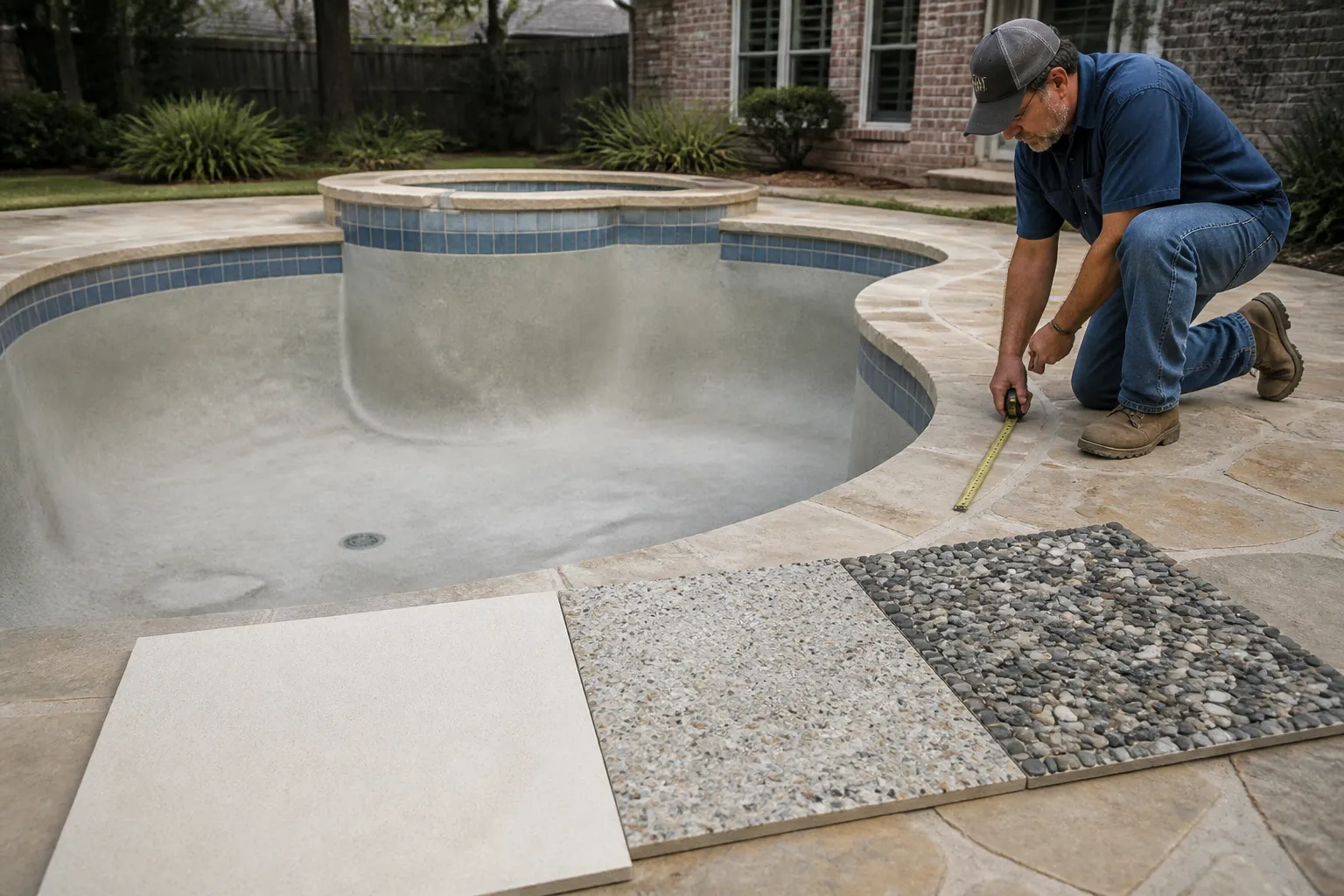
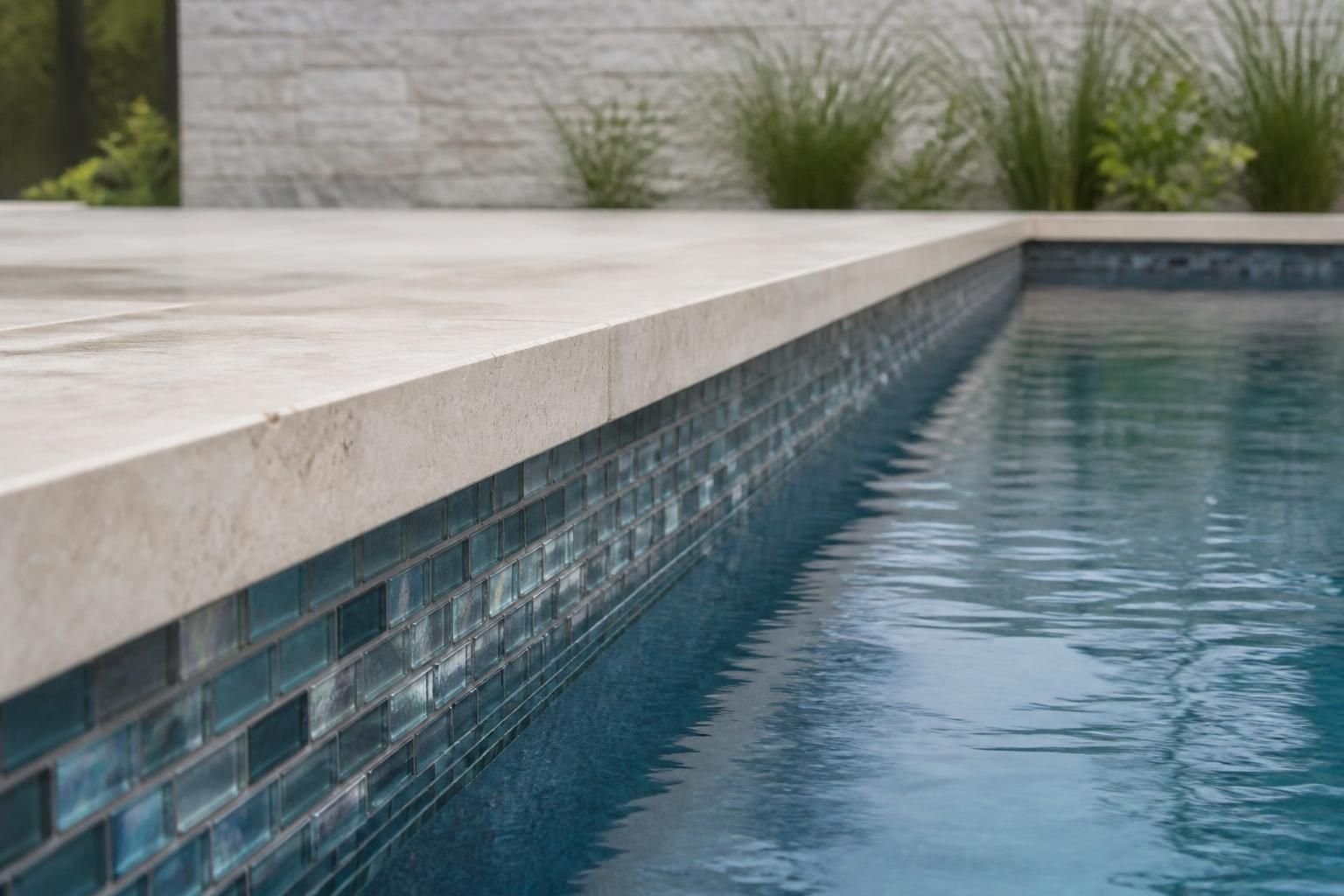
Pool plaster, tile, coping, decking, sealers, furniture, and landscaping all experience summer exposure. Proper water balance is an important part of protecting an interior finish, while appropriate cleaning helps avoid surface damage. Use products and tools that are suitable for the specific finish instead of assuming one method works for every material.
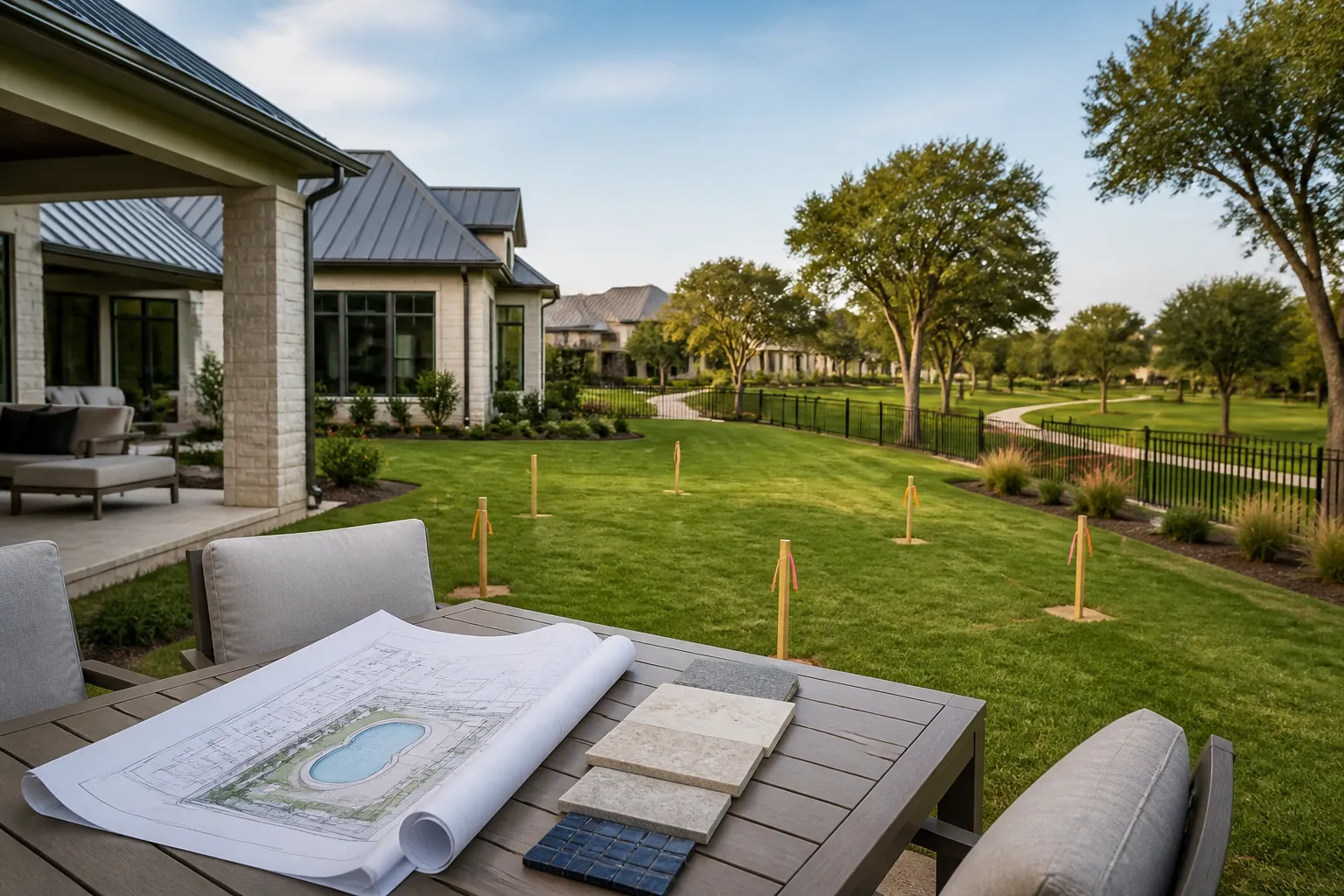
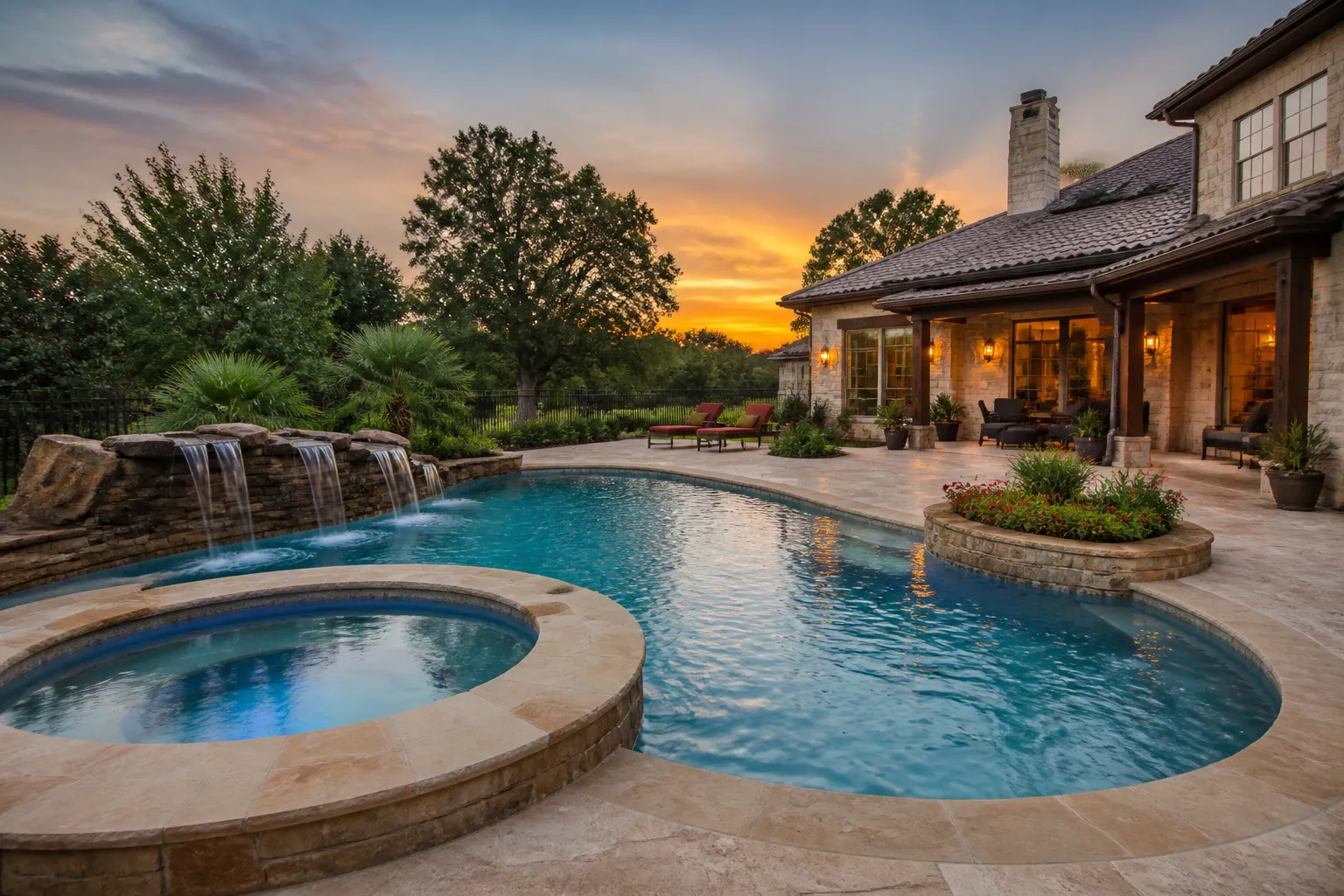
Decking can become uncomfortably hot, particularly on darker surfaces or areas with full afternoon sun. When planning a renovation, shade structures, planting, lighter material selections, and thoughtful seating locations can improve how the space feels. These choices are about everyday comfort as much as appearance.
Build a hot-weather pool routine
During peak heat, a simple routine goes a long way: watch the water level, empty baskets as needed, test water consistently, brush surfaces, and look over the equipment area. Pool use, rainfall, debris, and temperature can shift conditions quickly, so adjust based on what you see and measure.
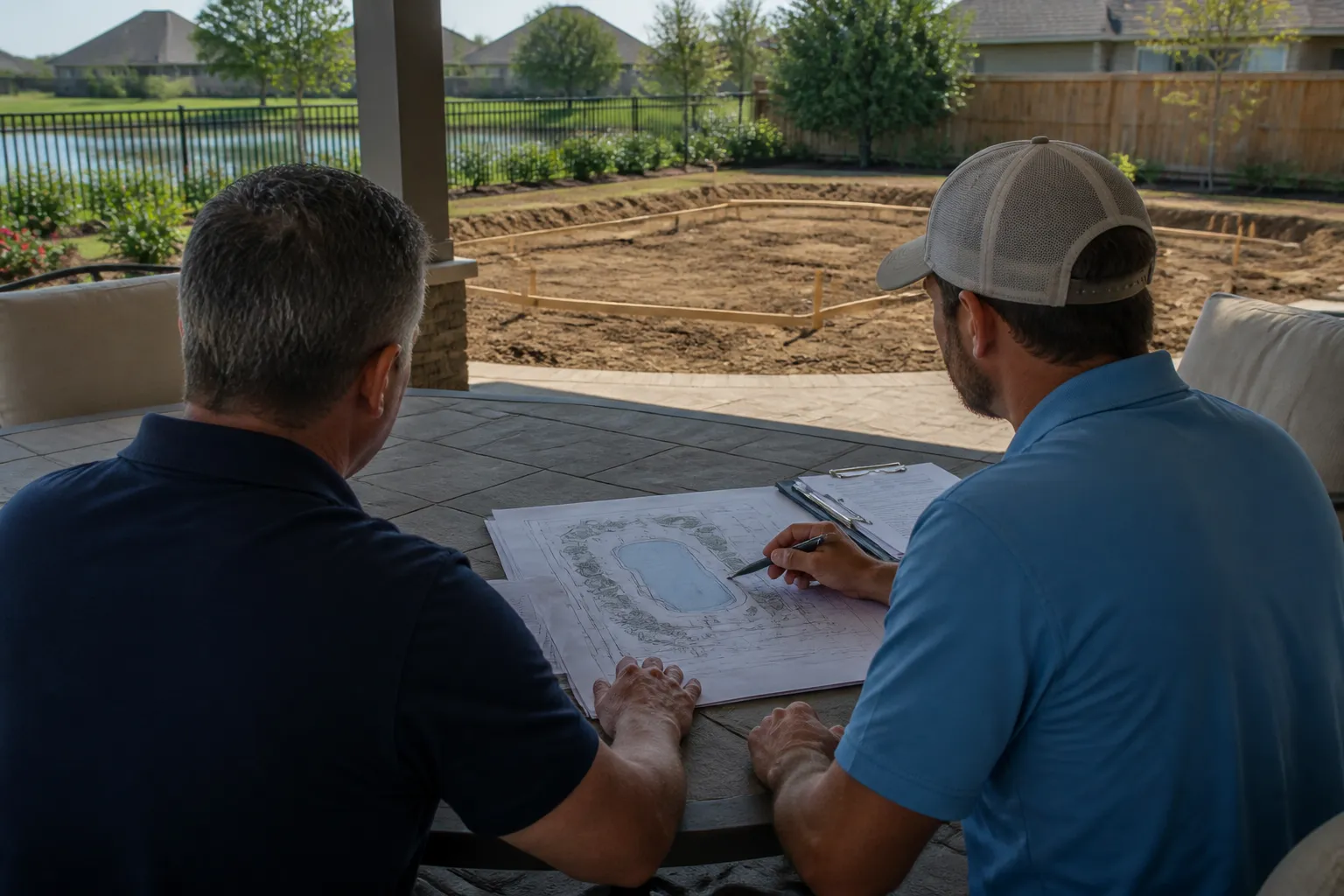
If you are renovating or building a pool in Fulshear, Katy, or nearby communities, discuss climate considerations early. Fulshear Custom Pools can help you evaluate finishes, equipment, circulation, shade, and automation options that make sense for long Texas summers and the way your household uses the backyard.